One of the first decisions aspiring authors face is choosing between traditional publishing and self-publishing. Both publishing paths offer unique advantages and challenges, and the right choice depends on an author’s goals, timeline, and desired level of control.
What Is Traditional Publishing?
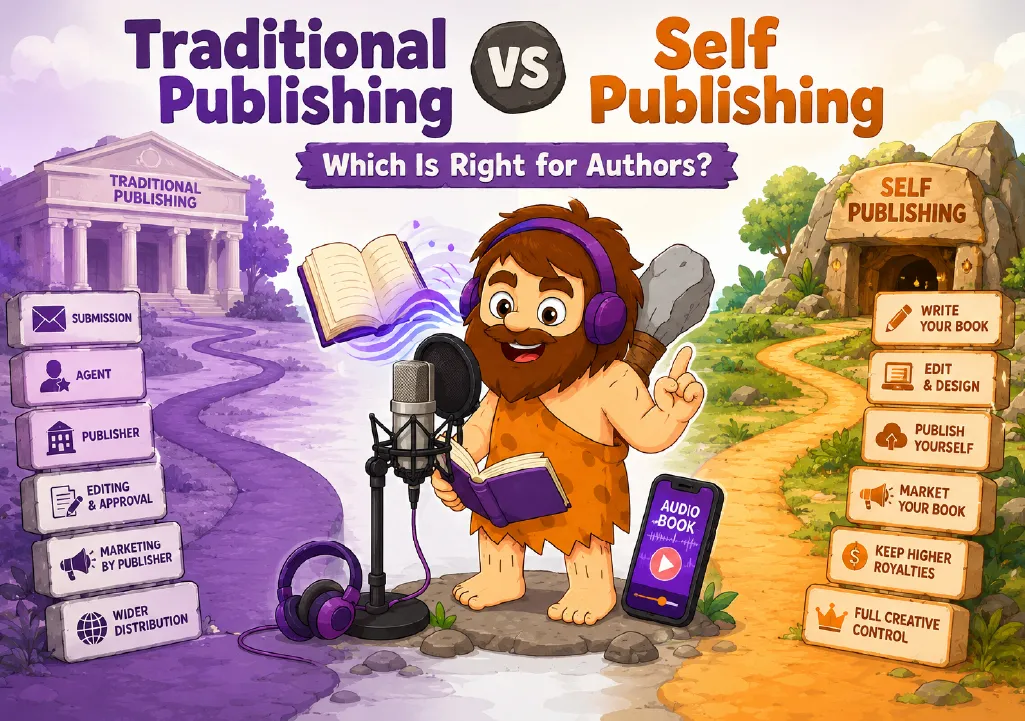
Traditional publishing involves working with an established publishing house. Authors typically submit manuscripts through literary agents or directly to publishers. If accepted, the publisher manages editing, cover design, printing, distribution, and some marketing activities.
In exchange, the publisher usually acquires certain publishing rights and pays the author royalties based on book sales.
Advantages of Traditional Publishing
- Professional publishing support
- Access to bookstore distribution networks
- Industry credibility and recognition
- No upfront production costs for accepted manuscripts
Challenges of Traditional Publishing
- Highly competitive acceptance process
- Longer publishing timelines
- Lower royalty percentages
- Limited creative control
What Is Self Publishing?
Self-publishing allows authors to publish independently without working through a traditional publisher. Authors maintain ownership of their work and control decisions related to editing, design, pricing, distribution, and marketing.
Modern platforms such as Amazon KDP and IngramSpark have made self-publishing more accessible than ever.
Advantages of Self Publishing
- Full creative control
- Faster publication process
- Higher royalty potential
- Ownership of publishing rights
- Greater flexibility in pricing and marketing
Challenges of Self Publishing
- Authors are responsible for production and marketing
- Professional services may require investment
- Success often depends on audience-building efforts
Key Differences Between Traditional and Self Publishing
| Factor | Traditional Publishing | Self Publishing |
| Creative Control | Limited | Full |
| Publishing Speed | Often 12–24 months | Weeks to months |
| Royalties | Typically lower | Typically higher |
| Ownership Rights | Often shared or transferred | Retained by author |
| Production Costs | Covered by publisher | Paid by author |
| Distribution | Publisher-managed | Author-managed or platform-based |
| Marketing Responsibility | Shared | Primarily author-driven |
Which Publishing Option Is Better?
Neither traditional publishing nor self-publishing is universally better.
Traditional publishing may be a good fit for authors seeking industry validation, broad bookstore distribution, and publisher-managed production.
Self-publishing may be ideal for authors who want creative freedom, faster publishing timelines, higher royalty percentages, and direct ownership of their intellectual property.
The best choice depends on your publishing goals, resources, and long-term vision as an author.
Final Thoughts
Traditional publishing and self-publishing represent two different paths to the same destination: getting your book into the hands of readers.
Before making a decision, evaluate your priorities carefully. Consider factors such as creative control, publishing speed, royalty expectations, and marketing responsibilities.
Understanding these differences can help you choose the publishing path that aligns best with your goals and publishing journey.