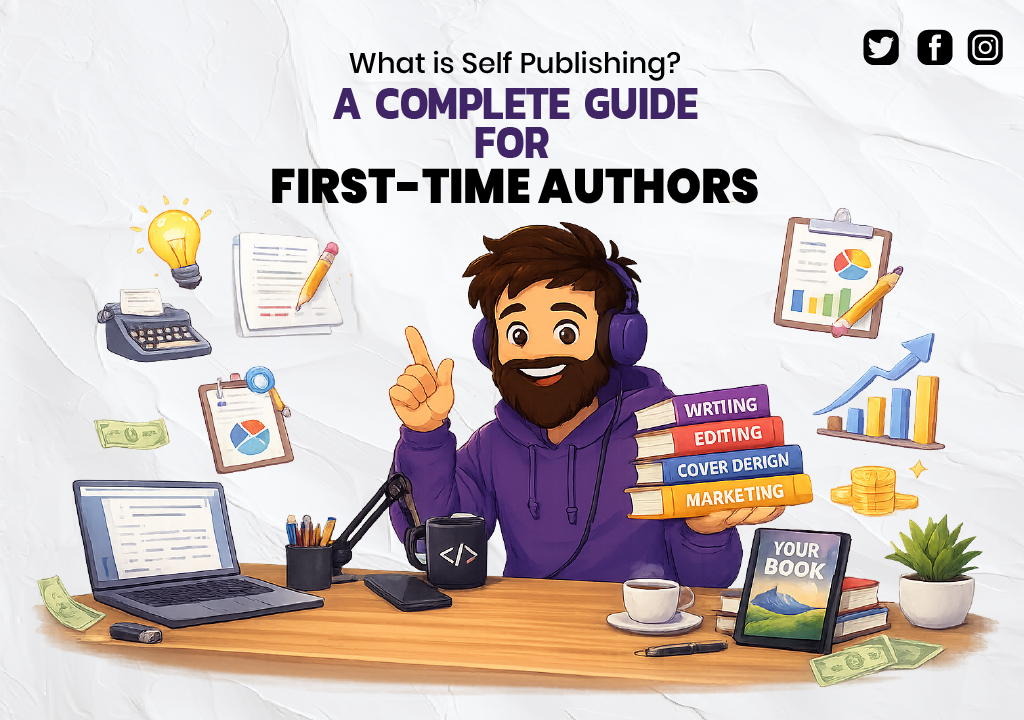
If you’ve ever dreamed of publishing a book, you’ve likely encountered the term “self-publishing.” Over the last decade, self-publishing has transformed from a niche alternative into one of the most popular publishing paths for authors worldwide.
Today, writers no longer need to wait for a traditional publishing contract to bring their stories, expertise, or ideas to readers. Modern publishing platforms have made it possible for authors to publish professionally while retaining full control over their work.
But what exactly is self-publishing, and how does it work?
This guide explains everything first-time authors need to know about self-publishing, including its advantages, challenges, costs, and how it compares to traditional publishing.
Quick Answer
Self-publishing is the process of independently publishing a book without working through a traditional publishing house. The author retains ownership and control over the book’s content, design, pricing, distribution, and marketing while earning royalties directly from sales.
Many authors choose self-publishing because it offers faster publishing timelines, greater creative freedom, and higher royalty potential.
Understanding Self Publishing
Traditionally, authors needed literary agents and publishing houses to bring their books to market. Publishers handled editing, design, printing, distribution, and marketing in exchange for a significant share of revenue and publishing rights.
Self-publishing changes this model entirely.
Instead of transferring publishing control to a publisher, authors oversee the publishing process themselves or work with professional service providers who assist with specific tasks such as editing, cover design, formatting, or marketing.
The author remains the decision-maker throughout the process.
This approach has become increasingly popular among:
- First-time authors
- Fiction writers
- Business professionals
- Coaches and consultants
- Memoir writers
- Independent creators
- Subject matter experts
How Does Self Publishing Work?
The self-publishing process typically follows several key stages.
Writing the Manuscript
Everything begins with creating a complete manuscript. Authors often spend months or years writing, revising, and refining their work before publication.
Editing the Book
Professional editing helps improve readability, clarity, consistency, and overall quality.
Most successful books undergo multiple rounds of editing before publication.
Designing the Cover
A professionally designed cover plays a significant role in attracting readers and increasing sales.
Readers frequently make purchasing decisions based on visual presentation before reading a book description.
Formatting the Interior
Books must be formatted correctly for both print and digital publication.
Proper formatting ensures a professional reading experience across devices and formats.
For a detailed explanation, see our book formatting guide.
Publishing and Distribution
Authors then upload their books to publishing platforms such as Amazon Kindle Direct Publishing (KDP), IngramSpark, or other distribution services.
Books become available to readers through online retailers, bookstores, and digital marketplaces.
Marketing the Book
Publishing is only part of the process. Authors must also develop marketing strategies to build visibility and attract readers.
Why Is Self Publishing So Popular?
The publishing industry has evolved dramatically over the past decade.
Many authors are choosing self-publishing because it offers advantages that traditional publishing often cannot provide.
Complete Creative Control
Self-published authors decide:
- Book title
- Cover design
- Interior layout
- Pricing
- Release date
- Marketing strategy
Traditional publishing contracts often require authors to surrender some of these decisions.
Faster Publishing Timelines
Traditional publishing can take one to two years after manuscript acceptance.
Self-publishing allows authors to publish once the book is ready.
In many cases, books can reach readers within weeks rather than years.
Higher Royalty Potential
Self-published authors often earn a larger percentage of each sale compared to traditionally published authors.
To learn more, read our guide on self publishing royalties explained.
Global Reach
Modern publishing platforms make it possible to sell books internationally without managing inventory or distribution logistics.
Self Publishing vs Traditional Publishing
One of the most common questions authors ask is whether self-publishing is better than traditional publishing.
The answer depends on your goals.
Traditional Publishing
Traditional publishers typically:
- Select manuscripts
- Manage production
- Handle distribution
- Provide some marketing support
In return, authors often receive lower royalties and less creative control.
Self Publishing
Self-published authors:
- Maintain ownership
- Control publishing decisions
- Keep higher royalty percentages
- Manage or outsource production tasks
For a deeper comparison, read our article on traditional publishing vs self publishing.
Neither path is universally better. The right choice depends on an author’s priorities, experience, and long-term goals.
Common Self Publishing Platforms
Several publishing platforms dominate today’s publishing landscape.
Amazon Kindle Direct Publishing (KDP)
Amazon KDP is one of the most widely used self-publishing platforms in the world.
It offers:
- eBook publishing
- Paperback publishing
- Print-on-demand services
- Global distribution
Authors interested in Amazon should read our complete Amazon KDP guide.
IngramSpark
IngramSpark provides extensive bookstore and library distribution opportunities.
Many professional authors use both KDP and IngramSpark as part of their publishing strategy.
Draft2Digital
Draft2Digital helps authors distribute eBooks across multiple online retailers from a single dashboard.
Apple Books and Kobo
These platforms can help authors reach additional international audiences.
How Much Does Self Publishing Cost?
One of the biggest misconceptions about self-publishing is that it is either completely free or extremely expensive.
In reality, publishing costs vary based on an author’s goals and quality expectations.
Potential expenses include:
- Editing
- Cover design
- Formatting
- ISBN purchases
- Marketing
- Audiobook production
Authors can choose to manage certain tasks themselves or hire professionals.
For a detailed breakdown, see how much does it cost to publish a book.
Common Challenges of Self Publishing
While self-publishing offers many advantages, it also comes with responsibilities.
Marketing Responsibility
Self-published authors are largely responsible for promoting their books and building an audience.
Quality Control
Without professional editing and design, books may struggle to compete in today’s marketplace.
Learning Curve
Publishing platforms, metadata optimization, and book marketing can initially feel overwhelming.
However, these challenges become more manageable with proper planning and guidance.
Common Myths About Self Publishing
Myth 1: Self-Published Books Are Lower Quality
Many bestselling books today are independently published.
Professional editing, design, and production standards matter more than the publishing path itself.
Myth 2: Self Publishing Is Easy Money
Successful publishing requires planning, persistence, and marketing.
Simply uploading a book does not guarantee sales.
Myth 3: Only New Authors Self Publish
Many experienced authors and industry professionals choose self-publishing because of its flexibility and ownership benefits.
Is Self Publishing Right for You?
Self-publishing may be a strong option if you want:
- Creative freedom
- Faster publication
- Ownership of your intellectual property
- Greater control over pricing and branding
- Direct access to royalties
It may be especially appealing to entrepreneurs, nonfiction authors, independent creatives, and writers building long-term author brands.
If your primary goal is maintaining full control over your publishing journey, self-publishing deserves serious consideration.
Tips for First-Time Self-Published Authors
Before publishing your first book, consider the following recommendations:
- Invest in professional editing.
- Research your target audience.
- Study successful books within your genre.
- Develop a marketing strategy before launch.
- Build an author platform early.
- Focus on quality over speed.
Most importantly, treat your book as a professional product rather than simply a completed manuscript.
Final Thoughts
Self-publishing has created unprecedented opportunities for authors to share their work with readers around the world.
By maintaining ownership, controlling the publishing process, and leveraging modern distribution platforms, authors can build successful publishing careers on their own terms.
However, successful self-publishing requires more than uploading a manuscript. Professional editing, strategic planning, quality design, and ongoing marketing all contribute to long-term success.
If you’re ready to begin your publishing journey, the next step is learning exactly how to self publish a book from manuscript completion to book launch.